Sunday, December 30, 2012

Why INDIA is so violent?


The anger, antagonism, outrage and collective soul searching which the country witnessed in the wake of a young girl’s brutal gang rape in Delhi could only get magnified by her death in a hospital in Singapore – a place, where she would have once dreamt to serve as a doctor being a medical student.  The protests started in Delhi where the shrill and anger of the Indians who were in deep slumber until recently, could then be heard from every ‘galli’, ‘nukkad’ and ‘muhalla.’ 

The protests in major cities across the country observed men, women and children screaming for justice and an end to the violence on women. Many others in the social and conventional media have added their commentary to the chorus. This isn’t necessarily the view of the majority of Indians, but certainly represents, at the very least, a vocal minority that is giving vent to deeply held frustrations.

But in a country with an abysmally low rate of convictions for rape and other crimes against women, (26% last year, down from 46% in the 1970s) it seems to be pointless to fixate on ratcheting up the penalty further. Consider that out of 635 cases of rape reported in Delhi this past year only one has led to a conviction. In a country of 124 Crore Indians, the countrymen raised their voice for just one incident. It’s perhaps understandable that people, frustrated by a failed and unresponsive system, are looking for novel and creative solutions to tackle the problem of violence in our society.  

As the Indian Republic heads into its 64th year, we seem to be caught between an illiberal, insensitive government-political class and a rampaging mob demanding instant solutions, with only a thin line separating the two. The gang rape ought to have been understood as a complex socio-political issue, resulting as much from bad policing as from entrenched notions of female purity and honour.

The irony which is intended to be raised through this article is, whether Delhi – the country’s capital should now be called as Rape Capital or Rage Capital?  

Wednesday, September 12, 2012

Life appears full circle for Yuvraj Singh


9:30pm. 10.2 Over’s. It’s another wicket down for India. Raina falls this time. Loud cheers at the M. A. Chidambaram Stadium, even as Raina was walking off. It was a much anticipated return of ‘You-We’ (Yuvraj Singh).

It appeared as if just for a moment cricket took a back seat.

If you would have touched down any day before 8th September at Vishakapatnam, a huge hoarding just in front of the cricket stadium proclaimed – “Welcome to the city of Destiny.” It was for a man who has been on a roller coaster of nightmares, dreams and ideas.

Yuvraj Singh was the fairy-tale at Vishakapatnam, a full capacity crowd had thronged inside the stadium in the anticipation of two major milestones. Vishakapatnam was hosting its first ever T-20 Match and it was a very extraordinary match for all Indians. A born-again Indian batsman – Yuvraj Singh was expected to commence his second innings on the cricket field.

The weather gods however had dissimilar ideas as rain made the match non-starter.   

Yuvraj was diagnosed with the ailment between his lungs within months of winning Man of the Tournament award in 2011 World Cup. His cricket career seemed to be in danger when the diagnosis was first revealed but this flamboyant all-rounder brawled back after undergoing three phases of chemotherapy in US.       
  
His comeback triggered excitement. Earlier he had mentioned that it was a new lease of life for him and he wanted to make that most of it. It doesn’t matters whether he scored 1 run or 34. What mattered was that he was playing.

The unique part behind this story is that he took a lap for few days and we, as One Country, One India, cheered for him. Though this champion of ours, had encountered such big problems, but the key was that when he was back on the field, he forgot it all.

Though India lost the match by 1 run, but Yuvraj Singh was the WINNER. 

Sunday, July 29, 2012

Tribute to the LEADER

An aviator, an entrepreneur, an industrialist, a visionary, a reformer, a leader and a patriot – Shri J R D Tata was born at Paris on 29th July 1904. The year 2012 is marked as the 108th Birth Anniversary of this legend who lived his live to transform the nation.

J R D Tata was the first Indian to have flown from Karachi to Bombay, when he founded the Tata Airlines in 1932, the forerunner of Air India which is today the national airliner.

he man who obtained the first pilot licence issued in India took this country to the next level. Ever since, he landed at India, he kept on adding new dimensions to this nation. Creating employments for lakhs of people in the world and working with a motive which aimed only at nation development, talks about the magnanimity and the generosity of the spirit named ‘Jehangir Ratanji Dadabhoy Tata.’

The nation honoured J R D Tata with numerous commendations including the nation's highest civilian award - Bharat Ratna.

The Indian Air Force conferred the rank of Air Commodore on J R D Tata and later promoted him to the rank of Air Vice-Marshal.

This gentleman has made a conglomerate grow, which takes a credit of providing the services and products to the world ranging from salt to software. Under his chairmanship, ‘M’ was replaced by ‘B’ (The Tata Group grew from 100 Million dollar company to 5 Billion dollar company). He started with 14 enterprises under his leadership and half a century later on July 26, 1988, when he left, Tata & Sons was a conglomerate of 95 enterprises which they either started or in which they had controlling interest.

Today on the auspicious occasion of 108th Birth Anniversary of this pioneer, I feel proud to be a part of his legacy and I pledge to sustain this legacy.

Varinder Singh
Blood Group - 'T'


Sunday, July 22, 2012

Time is Up. Pack Up.


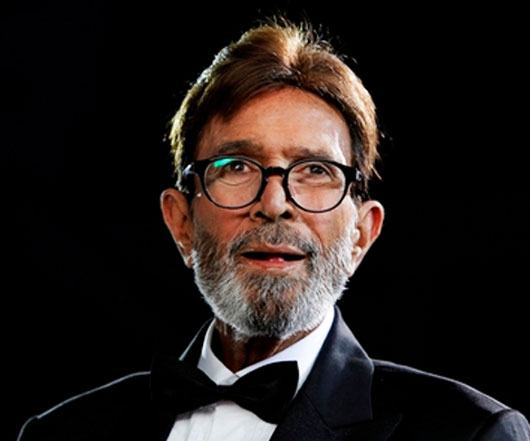
Time is up. Pack Up – The last word which the superstar uttered before he breathed last on 18th July 2012. Men have come and men have gone but there’s one man who will always live in our memories and reminiscences, because this special man has made a special place in all our hearts.

‘Babumoshai…’ – This line always echoes in my head whenever I think of you.

The famous bollywood actor, often called as ‘The First Superstar of Indian Cinema’ breathed last at his residence ‘Aashirwad’ in Mumbai on Wednesday and no soon did he do that, grief and shock gripped the nation.

It’s very difficult in life to practice what we preach. Kaka did so. He lived up to his famous dialogue - ‘Zindagi badi honi chahiye… lambi nahi.’

From ‘Aakhri Raat’ in 1966 to his first hit movie in 1969 ‘Aradhana’, from ‘Amar Prem’ to ‘Anand’ in the next decade, this gentleman made his identity as a person who was far beyond the term called ‘Actor.’ The world considered him an ICON.

I still believe that the word ‘Superstar’ was invented for him and for the years to come, it shall always remain his. Experts say, “Rajesh Khanna gave us a crash course in Romance. He introduced us to the special twinkle in the eye that made us feel good about ourselves.”

It’s hard to believe that a legend of an era of melodious songs is lost. The world shall miss the sadness of ‘Kahin door jab din dhal jaye’ and the joy of ‘Mere sapno ki raani kab aayegi tu.’

Thursday, June 14, 2012

World Environment Day Celebrated at Tata Power

Commemorated every year on 5th June, World Environment Day is one of the principal vehicles through with the United Nations stimulates the awareness of the environment and enhances political attention and action. To spread this message and create awareness, the Tata Power Team at Noida celebrated World Environment Day.

The event was inaugurated by Mr. Sanjay Aggarwal, Chief Projects – Eastern and Northern Region where he briefed everyone about the importance of environment being a power company and also reminded everyone about their roles and responsibilities to become true sons and daughters of mother earth.

This was followed by a presentation on the key environmental initiatives being taken by Tata Power as a company and how these initiatives have played a imperative role in combating the various environmental challenges. Dr. Taruna Saxena from Corporate Sustainability and Environment Department was invited to hold a brainstorming session which resulted in identifying few targets which would be taken at divisional level to contribute towards the betterment of environment. This was one of the outcomes of the in house research being carried out to calculate the per capita consumption of paper and electricity.

The event ended with free saplings distribution to employees where the employees owning the sapling need to parent the sprout and make it grow into a tree. A quiz competition was also organized for the employees on the theme of environment.

Nature gives peace to the souls of men. Let us Save it..!


Saturday, May 19, 2012

How do you feel SIR..?

It was 6th of May 2011. I was expecting clouds to rain heavily and winds to behave erratically. My desires to see my batch mates at same emotional level had no logical explanations. These absurd thoughts neither had any selfishness nor any dark philosophy hidden within it. But honestly since past 4 years, I was waiting for the day to end up with such kind of dramatic setup.

I woke up that morning expecting lots of phenomenal changes in my local universe. Loitering in my hostel lobby, I interviewed people and expected them to burst out in emotion. I expected the four year long movie to flash on my cerebral projector and drench their faces in tears.

Probably, the fear to shift my co-ordinates was bothering me more than emotional or sentimental detachments. Wild and random fear factors were scaring me. I could have easily figured out situations and emotions that were making me feel uncomfortable, but I wasn't in the mood to do that. I wanted to sit alone in silence, with my mental fluctuations lying on the x-axis. I kept my cell phone on silent mode. I had no idea about what, when and why to speak. My life, which have hitherto witnessed a lot many departures was witnessing one of the greatest departures till date.

The law of inertia which holds true for Newtonian body seemed to synchronize and satisfy my mental state too. I have always hated to call my self a satisfied, complacent and stoic kid but on 6th of may I was helpless, speechless, tasteless.

My search of the "never-land" diluted with the graduation. My quixotic and utopian dreams were drying at that very moment, and I was helpless. I was debating against myself for smoking, drinking, professionalism, responsibilities, love, money, fame and other lot of other affairs, which never knocked my priorities before that day.The waves of fears and hesitations subdued my emotional and sentimental breeze. I never wanted to accept it. This made me feel jittery, I was experiencing the unrest.

Some of my favoured juniors visited my lobby and asked " how are you feeling ?"

If I should utter and accept the truth - I felt like an orphan at that very moment.....!

Wednesday, May 16, 2012

Book Review: Rich Dad Poor Dad

A book which has been inspiration to many people, but the book seems to have produced as many critics as champions. The first time I read the book, I felt inspired. I wanted to run out and start following some of the ideas in the book, but what I found is that you can’t just merely run down to the “courthouse steps,” spend five hours, and come away with thousands of rupees in your pocket. I happened to pick up this book because of its catchy title “Rich Dad, Poor Dad” and its tag phrase “What the Rich teach their kids about money - that the poor and middle class do not!”

 Rich Dad, Poor Dad will help you reshape the way you think about what you do with your money. By the time you finish the book, you will be able to evaluate your own thoughts and habits surrounding money, and determine what you will need to do differently to accumulate wealth. I think some people miss the point and think this is a "get rich quick" book. Clearly, it is not. You can get rich quicker though and this book explains how.

 The title Rich Dad, Poor Dad refers to the two main male influences that Robert had as a child. His own father, the figurative “poor dad,” worked at a steady job for a living, while the “rich dad” (the father of a friend) ran a multitude of businesses. Most of this book is told from the perspective of Robert learning from his “rich dad” about how to make money – and seeing how his “poor dad” made huge money mistakes. The first two thirds of the book covers six lessons taught to Robert by his rich dad.

At last, some tangible things: read books and take classes to educate yourself! Ask questions! Do something! These are all great tips, but I felt really uncomfortable realizing that the first direct, clear applicable tip found in the book came near the end – and it was to read more books. The book ended with a very brief section that outlined another unbelievably good financial situation.

Mr. Kiyosaki says his main intention behind writing this book is to educate financial literacy to those of us who are not blessed adequate to have a “Rich Dad” to explain us how to invest our money correctly. He argues that the present educational system renders us financially incompetent and, allows rich corporations and the Government to exploit us for money because of this lack of financial literacy. He offers many valuable insights into money management that he obtained from his “Rich Dad” and from his personal practice.

 His definition of ‘assets’ and ‘liabilities’ was a revelation to me, and a sad one at that, because I after reading it, I became conscious that most of the things that I considered my assets were actually liabilities in the long run. Through this book, he also gave detailed examples on how to manage ones cash flow so that returns from the assets can be invested into procuring more assets.

All said and done, I would take down two important lessons from this book:
  • The rich don’t work for money – they invent money
  • The need to work is to learn, not to earn money
The critics of the book say that the financial advice offered in this book is too general and not very accurate.

 
About the Author: Born and raised in Hawaii, Robert T. Kiyosaki co-founded an international education company that operated in seven countries, teaching business to tens of thousands of graduates. Now retired, Robert does what he enjoys most - INVESTING. Concerned about the growing gap between the haves and have not’s, Robert created the board game CASHFLOW, which teaches the game of money, here before only known by the rich.